
MS Access As A Dev Tool
Access continues to be a highly efficient tool for business database development.
 Call (323) 285-0939
 If your Access database is slow, error-prone, or locking up in multi-user use, it can be made reliable again. We fix broken forms and reports, repair corruption, and remove bottlenecks like missing indexes and inefficient VBA.
In Chandler, Access often runs scheduling, job tracking, purchasing, and compliance with Excel and shared folders. If performance drops, queries get tuned, imports tightened, and joins simplified so daily work stays predictable.
If the data has outgrown a single Access file, Access can stay as the front end while tables are upsized to SQL Server. Call (323) 285-0939 for a free consultation today.
Some Chandler companies are still getting solid use out of an older database, right up until it starts slowing people down. We step in when the file feels shaky, the screens get clunky, or the data side has clearly outgrown the original setup.
We step into older systems that have become hard to trust and get them working again without turning the whole workflow upside down.
We usually help companies that depend on one important file every day and do not have time for it to keep acting up.
First we find the real choke point. Then we clean up what is causing the trouble and keep the useful parts people already know.
Projects are handled remotely, and we regularly help businesses in Chandler, Gilbert, Mesa, Tempe, and nearby East Valley service areas.
Call: (323) 285-0939
Service Area: Chandler, Gilbert, Mesa, Tempe, And The East Valley
Owner And Access Expert: Alison Balter
Microsoft Certified Solutions Developer (MCSD)
Microsoft Certified Professional (MCP)
Microsoft Certified Trainer (MCT)
Microsoft Certified Partner (MCPa)
Owner And Principal Programmer Alison Balter leads MS Access Solutions. She is a Microsoft Certified Partner and Microsoft Certified Professional (MCP), and the author of 15 Microsoft Access books and over 300 internationally marketed training videos. If you are comparing programmers, look for someone who can explain the why behind the fix, not just ship code.
We usually begin with a simple question: where does it break down during a normal workday? Sometimes that answer is a slow screen. Sometimes the numbers on a printout are off. Sometimes the only note you get is, "It froze again." Sometimes it is just, "This thing is acting weird today." That is enough to start. We trace the slowdown, clean up the weak parts, and get the file into better shape without making your staff relearn everything.







Access continues to be a highly efficient tool for business database development.
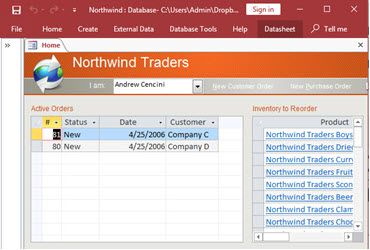
How to create a Microsoft Access application with some useful tips and best practices.
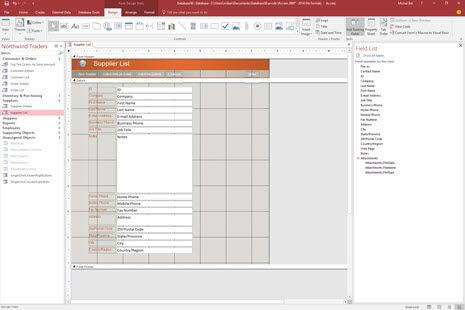
Tips for finding a Microsoft Access developer near you.
Answer: Yes. It is still a practical choice for a lot of internal business work. When the file is designed well and sized properly, it can handle quoting, scheduling, reporting, and day-to-day tracking without a lot of fuss.
Answer: Start with the setup. Most locking trouble comes from too many people sharing the same file, oversized screens, or a front end sitting on the network when it should be local. We usually check four things first: split the database, give each person their own front end, trim record sources that pull too much data, and check the network path and lock file. In many cases, one or two changes calm the file down fast.
If you want a fast first step, we can review your setup remotely and tell you what to change. You'll usually feel a difference right away.
Answer: A lot of the time, you do not need to throw out the whole setup. If people still like the screens but the file is getting touchy, slow, or crowded, moving the tables to SQL Server is often the better next step. That gives you a stronger place for the data while keeping the part your staff already knows. If the file is still small and steady, it may make more sense to leave it alone for now.
Answer: It depends on what broke. Some jobs are quick cleanups. Others turn into a deeper rebuild. We usually start with broken links, bad joins, damaged queries, and screens or printouts that throw errors. If the code is part of the problem, we clean that up too and test the whole work path before we hand it back.
Answer: Be careful here. Do not keep clicking around in a damaged file and hope it sorts itself out. We make a safe copy first, try the least risky recovery steps, and then check the tables, relationships, and code. If the damage keeps coming back, we look for the real cause, such as a shared front end, a bad network path, or a sync folder in the middle of the setup.
Answer: We do both. Sometimes the design is the problem. Sometimes the slowdown is buried in old VBA. We go through the code, remove the waste, simplify the logic, and leave clear notes so the next person is not left wondering what happened.
Answer: Yes. Most Access work can be done remotely with a secure process, including reviews, repairs, and SQL Server upsizing. When a job needs hands-on coordination, we schedule it, but the majority of fixes are handled without disrupting your day.
Call MS Access Solutions at (323) 285-0939 for your FREE consultation.
File damage rarely shows up as one big dramatic crash. More often, it starts with little things people notice during the day. A screen hangs. A printout fails. Somebody gets kicked out for no clear reason. One setup we still see a lot is a shared front-end file sitting on the network. It seems convenient until the complaints start coming in one by one. That is when people start saying, "It was fine yesterday."
First, stop using the file and make a safe copy. After that, we take the least risky path. Sometimes Compact and Repair is enough. Sometimes the better move is to build a fresh shell, bring the objects over, reconnect the tables, and test each work area one by one. If the back-end file is the weak spot, moving the tables into SQL Server can take a lot of pressure off. If you are stuck, stop there and get help before the damage spreads.
We work with businesses across Arizona on Microsoft Access database programming, repair, automation, and migration. These city pages cover the kinds of Access problems we help solve across the state.

Phoenix brings the heaviest file sizes and the most complicated repair work -- databases that have been running for a decade and collecting problems the whole time.
Learn More
Tucson work tends to center on older files that have been sitting in maintenance mode for years and need a proper review before anything else changes.
Learn More
Mesa is often about persistent small problems that nobody has fully fixed -- import gaps, report quirks, and form behavior that staff have learned to work around.
Learn More
Gilbert comes up most when a shared file has started throwing locking errors or a report has been printing wrong numbers longer than anyone wants to admit.
Learn More
Glendale is a fit when the database needs more than a surface fix -- custom work, structural cleanup, or a path forward that does not break what is still running.
Learn More
Scottsdale files are often still doing real daily work but have developed enough reliability issues that people have stopped fully trusting the output.
Learn More
Peoria tends to be broken macros, stalled imports, and reports that stopped matching what staff know the numbers should be.
Learn More
Tempe work is usually about getting a database back to a place where people can use it without second-guessing what it is doing or manually checking the output.
Learn More
Surprise databases often grew faster than their design did -- more users, more data sources, and more daily load than the original file was built to handle.
Learn More
San Tan Valley work often involves a file that multiple people have added to over the years and that now needs a proper cleanup before the next person inherits it.
Learn More
Goodyear is a good fit when the main ask is reliable repairs and cleanup that holds -- not another patch that creates something new to fix next month.
Learn More
Yuma businesses need a database that holds up under daily pressure -- solid structure, clean imports, and reports that do not require manual verification after every run.
Learn More
Avondale is where the database still works but the daily friction has built up enough that someone finally asked whether it could just be fixed properly.
Learn More
Buckeye is growing fast and the database work here often reflects that -- new builds for businesses moving off spreadsheets and repairs on files that were never designed for the current workload.
Learn More
Flagstaff businesses get the same remote Access support as the rest of Arizona -- no on-site visit needed, and distance has never been a barrier to getting the work done right.
Learn More