
MS Access As A Dev Tool
Access continues to be a highly efficient tool for business database development.
 Call (323) 285-0939
 If your Access database is running slow, throwing random errors, or locking up when more than one person is using it, we can help you stabilize it fast. We fix broken forms and reports, repair corruption, and track down the real causes of performance problems, not just the symptoms. That might be missing indexes, bloated tables, duplicated data, or VBA code that is doing more work than it needs to.
If your database has outgrown a single Access file, we can keep Access as the familiar front end and move the tables to SQL Server for better speed, reliability, and multi-user stability. Call (323) 285-0939 for a free consultation so we can start helping you right away.
In Duarte, a lot of Access databases start as a quick tracker and then turn into the system everyone depends on. We see it supporting intake, scheduling, inventory, and compliance reporting for medical offices, nonprofits, service companies, and small operations across the San Gabriel Valley.
The workflow is usually simple on paper: someone enters a request, the staff updates status through the day, and the owner needs a clean report at the end of the week. When Access slows down or locks up, that routine breaks. If people are texting updates from the field, we make sure those changes land cleanly and don't create duplicates. We stabilize the database by tuning queries, fixing forms and reports, and cleaning up tables that have drifted over time.
Duarte organizations also deal with real operational constraints, like staff working from multiple locations, field users coming in and out of the office network, and data being imported from spreadsheets or vendor systems. If your Access back end has outgrown the file, we can keep your Access screens and move the tables to SQL Server/Azure SQL for better multi-user reliability.
MS Access Solutions is led by Alison Balter, a Microsoft Certified Partner and Microsoft Certified Professional who has built and supported Microsoft Access applications for more than 36 years. That experience matters when your database is in daily use, and you need answers that hold up in the real world.
In Duarte, we often step into databases that were expanded over time by necessity. A few extra tables here, a report there, and suddenly the file is handling scheduling, billing, and operational reporting for multiple people. We focus on the parts that cause pain first: slow screens, unstable reports, confusing data entry flows, and imports that keep breaking when a spreadsheet changes. A lot of the time, you're not asking for a new system; you just want the one you have to stop surprising you.
Our process is practical. We keep the steps small so you can feel the improvement as we go. We listen, map the workflow your staff actually follows, then fix the design and queries so the system stays stable. If people work across more than one location or need remote access, we can set up a safer split front end and, when appropriate, move the data to SQL Server or Azure SQL. The goal is a database that feels predictable again.


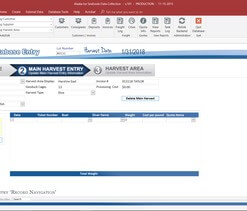





Access continues to be a highly efficient tool for business database development.
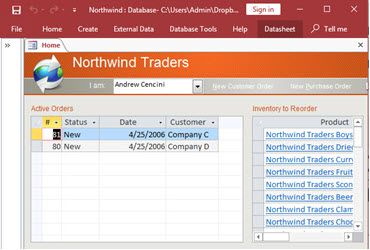
How to create a Microsoft Access application with some useful tips and best practices.
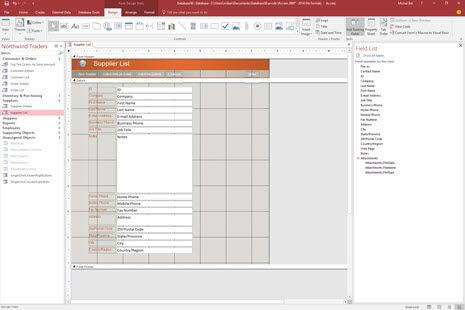
Your Access developer near you has practical advice on choosing and working with an Access consultant.
Call MS Access Solutions at (323) 285-0939 for a FREE consultation. If you tell us what feels slow or unstable, we will tell you what we would check first.
In real use, slowness shows up as simply irritating. A report that used to print while you took a sip of coffee now makes you stare at the screen. A button click pauses. Someone clicks twice, and suddenly you have duplicate records.
We hear this a lot from offices in the the Duarte business community. The database is doing the same job it always did, but the data volume and the number of people using it have changed. The design needs to catch up.
Before changing anything, we time the slow objects. Which report is the worst offender. Which form takes the longest to open. Which search box lags when you type. Then we look at the record sources and the joins behind those screens.
Indexes are shortcuts, but they need to be the right shortcuts. If people filter by date, status, customer, or job number, those fields often need indexing. If nobody filters by a field, indexing it can actually slow down data entry.
The goal is simple: make the most common searches fast without creating extra overhead every time someone saves a record.
A very common pattern is a form that loads years of history just so a user can work on today's items. That is expensive. A better pattern is to filter early: start with a date range, a search box, or a small list, then drill in.
The same idea applies to combo boxes. If a drop-down is trying to pull 20,000 rows, it will feel sluggish. We can switch to incremental search, narrow the list, or use a separate lookup form.
If several people open the same front end from a shared folder, performance and stability usually suffer. A reliable approach is to split the database and distribute a local front end to each workstation, with linked tables pointing to a shared back end.
That one change often reduces record locking, cuts down on corruption, and makes the whole system feel calmer during busy hours.
We look for missing indexes, queries that force full table scans, forms that open unfiltered, and reports that do heavy calculations inside complex joins. We also review VBA that runs loops against recordsets when a set-based query would be faster.
Most of these fixes are targeted. You should be able to measure the improvement immediately, like taking a report from two minutes down to ten seconds.
If the database is already well designed and it is still struggling, the back end may have outgrown a single Access file. In that case, moving the tables to SQL Server while keeping Access as the front end is a practical next step.
You keep the familiar forms and reports, but you gain stronger concurrency, better backups, and room for growth. It is a modernization path that does not force an all-at-once rewrite.
MS Access Solutions focuses on practical improvements that support day-to-day work. We tune performance, reduce multi-user conflicts, and help you modernize safely so your database stays dependable as you grow.
Answer: Most slowdowns are caused by query patterns that no longer match the data size, missing or wrong indexes, and forms that load too many records at once. We usually start by timing the slow screens and reports, then tune record sources, joins, and filters so Access only pulls what the user needs.
Answer: The most common cause is multiple users sharing the same front-end file from a network folder. A safer approach is to split the database and distribute a local front end to each workstation, with linked tables pointing to a shared back end. This reduces locking, improves speed, and helps prevent corruption.
Answer: Yes. This is one of the cleanest modernization paths when you want better performance and reliability without rebuilding everything. Access stays as the familiar interface, while SQL Server handles concurrency, security, and backups more effectively, especially as your data and user count grow.
Answer: It is risky to run a shared Access database directly from cloud-sync folders because the sync process can interfere with how Access writes data and locks files. If you need remote access, a better option is a local front end with a proper back end such as SQL Server, Azure SQL, or a secured VPN to your network location.
Answer: Compact and Repair rebuilds the file structure, can reduce file size, and sometimes resolves minor inconsistencies. It does not fix poor design, bad queries, or unstable multi-user setups. If you are seeing frequent crashes, corrupted objects, or unexplained behavior, the right move is to diagnose the root cause before corruption spreads.
Answer: Yes. We can automate imports, validate incoming data, and standardize column formats so reports do not break when a spreadsheet changes. In many cases, the best long-term solution is to move recurring spreadsheet data into proper tables, then use Excel only for exporting and analysis.
Answer: We support both 32-bit and 64-bit Access. The most common upgrade issue is VBA that calls older Windows APIs or uses 32-bit declarations. We can update the code, test critical workflows, and make sure forms, reports, and automation behave the same after the upgrade.
If you are in Duarte and you are dealing with a slow database, broken reports, or multi-user problems, call MS Access Solutions at (323) 285-0939 and we will tell you what we would check first.
Get more information about our programming services on the Microsoft Access programmer El Monte, CA web page.