
MS Access As A Dev Tool
Access continues to be a highly efficient tool for business database development.
 Call (323) 285-0939
The Best Microsoft Access Database Solutions owner, consultant, and principal programmer is Alison Balter - a recognized expert Microsoft Access consultant. Alison is the author of 15 Microsoft Access training books and videos. She is a frequent guest speaker at MS Access conferences and has developed hundreds of applications for businesses of all types.
We know your business data is important; we listen to your concerns, ask questions, and gather information from all stakeholders. We discuss your needs and requirements for your database. We find out what you want, why you need various features so we can obtain as much information as possible. Once we have the information we need, we work with you to design the proper database architecture, plus the dashboards, the questions (queries), forms, and reports you need for an excellent database system.

We also create websites designed for speed to display your data accurately, using ASP.NET technology. Fast, secure, and robust, our ASP.NET websites and web applications give you a true business tool for finding and displaying information dynamically on the web.

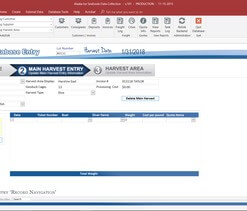





Access continues to be a highly efficient tool for business database development.
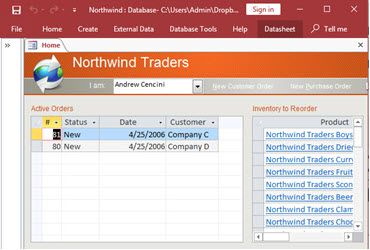
How to create a Microsoft Access application with some unique tips and tricks.
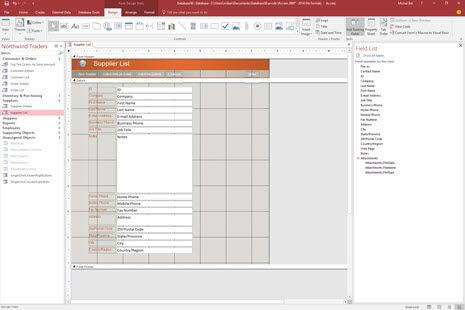
Your Access developer near me has some great info for you about using Access efficiently.
Microsoft Access comes bundled with Microsoft Office, though many people don't realize it's sitting there until they need a database. You can also buy it standalone if the full Office suite is more than you need. Access lets you design tables, build queries, and create forms without writing code. The visual designers handle most of it through point-and-click interfaces. For someone new to databases, you can have something working in an afternoon.
Where Access gets powerful is when you add programming. Business applications built on Access use VBA (Visual Basic for Applications) for the logic. Here's what matters: Access works seamlessly with Excel, Word, Outlook, and SQL Server. You can export data to Excel reports, auto-generate Word documents, send emails through Outlook, or when your database outgrows Access's file system, migrate tables to SQL Server while keeping the Access interface your staff already knows. That integration is why thousands of businesses still rely on it daily.
Understanding Access history helps explain why it became the database platform millions of businesses rely on. The early years were rocky, but Microsoft's persistence and the platform's core strengths won over skeptical businesses.
Microsoft launched Access 1.0 in late 1992 as their entry into desktop databases. Ambitious project, maybe too ambitious. Windows itself was still maturing, and here's Microsoft releasing a database trying to do everything. Access 1.0 showed promise but had serious stability problems. Six months later, version 1.1 arrived with critical fixes focused on working properly with other Office programs. Back then, getting Word and Excel to communicate wasn't automatic. Version 1.1 also introduced Access BASIC, letting programmers write custom code and build real business logic instead of just storing data.
That mattered. Access BASIC transformed Access from a simple data tool into a true development platform. Developers could now create workflows, calculations, validations, and multi-step processes. Real business applications. But version 1.1 was buggy. Really buggy. Early adopters spent considerable time working around Access problems while trying to solve their actual business needs. I've talked with developers from that era. They describe losing hours of work to random crashes and queries that mysteriously stopped working.
End of 1993, Microsoft released Windows 3.1 and Office Pro 4.3 together. Game changer. Windows 3.1 could finally handle what Access demanded. Better stability, improved memory management, didn't freeze when you tried doing multiple things. Before this, Windows barely held itself together while Access juggled database operations.
This combination of stable Windows and better Office integration converted the skeptics. Businesses that rejected Access 1.0 started testing it again. Many of those companies still use Access today, which tells you something about the platform's staying power.
Price. That's the honest answer. Small businesses needed databases but couldn't spend $50,000 on Oracle or Sybase plus another $100,000 yearly for database administrators. Access cost around $300 and came with Office, which you probably already bought for Word and Excel.
Think about that business meeting. "We need a database system." "That'll cost at least $75,000 to start." "Wait, we already have Access? It came with Office?" "Let's try that first." Microsoft's pricing strategy was brilliant. Companies discovered they owned database software and didn't know it. For the first time, businesses could implement professional database systems without massive capital investment or specialized IT staff.
Context matters here. In 1993, a high-end business computer had maybe 100 MB of total hard drive space. Not per file, total storage for everything. Your operating system, programs, and all documents fit in 100 megabytes. Individual files were measured in kilobytes. Most software worked with minimal data because storage was so limited. A contact database with 500 entries was considered substantial.
Access could handle databases over 10 MB, which was impressive then. You could store thousands of customer records, years of invoices, detailed inventory. Real business data that previously required expensive systems or custom programming costing six figures. A $5,000 computer running $300 software could suddenly do what previously cost $100,000 or more in hardware and software.
Here's where it got tricky. Access's ability to handle larger databases created performance problems nobody anticipated until businesses actually built those databases. Typical 1993 computers had 4-8 MB of RAM, maybe 10 MB if you spent extra. When your Access database hit 15-20 MB and you opened it on a machine with 8 MB of RAM, everything slowed dramatically. Forms took forever to load. Queries filtering thousands of records crawled. Multiple people accessing the same file over the network? Major conflicts and delays.
This wasn't really Access's fault. The hardware just wasn't there yet. But businesses building serious applications hit these walls fast. Developers got creative. They learned to split databases into separate front-end and back-end files, index critical fields, optimize queries, and write VBA code that loaded only necessary data instead of entire tables. These optimization techniques from the 1990s are now standard best practices. What started as desperate workarounds for inadequate hardware became the foundation for building robust Access applications.
Fast forward to now. Modern computers with 16 GB of RAM, multi-core processors, and solid-state drives eliminated those hardware constraints completely. A properly designed Access application on current hardware performs excellently even with hundreds of thousands of records. But the fundamentals? Same as 1992.
Access remains the most cost-effective database for small to medium businesses. Still integrates seamlessly with Excel, Word, Outlook, SQL Server. VBA evolved from Access BASIC but it's essentially the same language. The design principles haven't changed: proper table relationships, strategic indexing, efficient queries.
Many businesses that adopted Access in the mid-90s still use it. Their applications evolved with better speed, enhanced security, more users. But the core business logic? Often unchanged. We regularly migrate clients from Access 97 through Access 365. You'd be surprised how much original code still works perfectly. We update security, optimize slow parts, rebuild outdated forms. But business logic programmed 36+ years ago? Frequently still valid and effective.
Access survived its buggy early versions because it solved real problems at prices businesses could afford. Companies needed databases. Access delivered without requiring computer science degrees or huge budgets. Early versions had bugs, hardware limitations caused real pain. But Microsoft kept improving it, and developers figured out how to build reliable applications despite the challenges.
That's why in 2025 I'm still programming Access databases. What Microsoft got right in 1992 still matters: visual design tools, Office integration, programmability, affordable pricing. The hardware caught up. The bugs got fixed. Best practices got documented. What remains is a platform that excels at its purpose: giving small to medium businesses affordable, understandable databases they can maintain without specialized IT teams.
Not the flashiest technology. Not cutting-edge. But it works, and for many businesses, that's what counts.
I started working with Access in the late 90s. Back then, I honestly thought it was a toy database, something for home projects, not serious business work. I was wrong about that. Over the years, I've seen Access run manufacturing operations, manage multi-million dollar construction projects, track inventory for distributors with 10,000+ SKUs. I've seen databases supporting 50 simultaneous users with response times under a second. I've seen Access applications replace $200,000 custom software and perform better because the people using it could actually modify it themselves.
But I've also seen plenty of disasters. Unsplit databases where 15 people open the same file and wonder why it keeps corrupting. No indexes anywhere. Queries scanning 100,000 records to find one. Forms loading entire tables because someone checked "Load All Records" and forgot about it. Databases on VPN-mounted network shares taking 30 seconds just to open a form. Access doesn't prevent you from making these mistakes, and the consequences hit business operations hard.
The difference between Access applications that work great and ones that barely function comes down to proper design knowledge. Table structure matters significantly. Strategic indexing is essential. Query optimization directly affects performance. Understanding how Access interacts with file systems and networks prevents common problems. None of these concepts are overly complex, but they require proper training and experience. We troubleshoot Access databases with corruption, speed, or multi-user issues and build new applications following current best practices.
When you need an expert Access programmer for your Cudahy, California, business contact us at (323) 285-0939.
More Access programmer cities we serve: Access Programmer Culver City, CA.