
MS Access As A Dev Tool
Access continues to be a highly efficient tool for business database development.
 Call (323) 285-0939
 If your Access database is crashing, throwing "unrecognized database format" errors, or locking up in multi-user use, we can help. We fix forms, reports, queries, and VBA so the file is stable again.
Stockton businesses often start in Excel and outgrow it fast. We can convert spreadsheets into a clean Access app, automate steps with VBA, and modernize the data layer with SQL Server when needed. Call (323) 285-0939 for a free consultation.

If you rely on a Microsoft Access database to run jobs, track inventory, or manage billing, you know how painful it gets when a form breaks or a report starts misbehaving. That is usually a design issue, not a user mistake.
We help Stockton organizations repair and improve Access systems: cleaning up tables and relationships, rewriting slow queries, replacing fragile macros with VBA, and making multi-user use predictable. You keep the screens people know, while the database behaves.
If you are planning to grow, we can modernize the back end by moving tables to SQL Server and keeping Access as the front end. That adds reliability, stronger security options, and room for more users without constant file corruption.
Alison Balter is the founder, owner, and principal Microsoft Access programmer for MS Access Solutions. She is the author of 15 Microsoft Access training books and video courses, and she helps organizations build stable, user-friendly database applications across many industries.
Your database is usually tied to billing, scheduling, inventory, compliance, or payroll, so “mostly working” is not good enough. We start by listening to what is breaking and what has to work every day, then we review your tables, relationships, queries, and VBA. From there we make targeted fixes and improvements so you get a stable Access application that is easier to maintain and easier to trust.







Access continues to be a highly efficient tool for business database development.
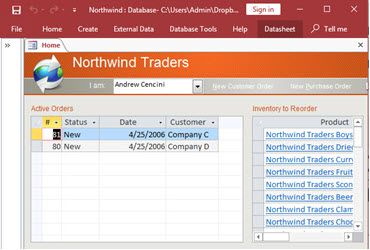
How to create a Microsoft Access application with some useful tips and best practices.
Your Access developer near you has practical advice on choosing and working with an Access consultant.
The material below originally appeared in Alison Balter's book Mastering Microsoft Office Access 2007 Development and is reprinted here with the author's permission. There may be references to Figures that are not reprintable and are not used on this page.
Although the developer's goal is normalization, often it makes sense to deviate from normal forms. We refer to this process as denormalization. The primary reason for applying denormalization is to enhance performance.
An example of when denormalization might be the preferred tactic could involve an open invoices table and a summarized accounting table. It might be impractical to calculate summarized accounting information for a customer when we need it. Instead, you can maintain the summary calculations in a summarized accounting table so that you can easily retrieve them as needed.
Although the upside of this scenario is improved performance, the downside is that you must update the summary table whenever you make changes to the open invoices. This imposes a definite trade-off between performance and maintainability. You must decide whether the trade-off is worthwhile.
Although integrity rules are not part of normal forms, they are definitely part of the database design process. Integrity rules are broken into two categories. They include overall integrity rules and database-specific integrity rules.
The two types of overall integrity rules are referential integrity rules and entity integrity rules. Referential integrity rules dictate that a database does not contain orphan foreign key values. This means:
Entity integrity dictates that the primary key value cannot be Null. This rule applies not only to single-column primary keys, but also to multi-column primary keys. In fact, in a multi-column primary key, no field in the primary key can be Null. This makes sense because, if any part of the primary key can be Null, the primary key can no longer act as a unique identifier for the row.
Fortunately, the Access Database Engine (Access 2007's new version of the JET database engine, available with the new ACCDB file format) does not allow a field in a primary key to be Null.
The other set of rules applied to a database are not applicable to all databases but are, instead, dictated by business rules that apply to a specific application. Database-specific rules are as important as overall integrity rules. They ensure that only valid data is entered into a database. An example of a database-specific integrity rule is that the delivery date for an order must fall after the order date.
The preceding originally appeared in Alison Balter's book Mastering Microsoft Office Access 2007 Development and is reprinted here with the author's permission.
When you need a Microsoft Access programmer for your Stockton, California business, call MS Access Solutions at (323) 285-0939. We have over 36 years experience in Microsoft Access programmer services. We create Access database applications for all industries and niches including, but not limited to, hospitals, local state and federal government agencies, the U.S. military, universities colleges and school districes, landscaping and agriculture, human resources departments and human resources agencies, and insurance carriers.
We have experience developing large complex Microsoft Access with SQL Server database applications. We also work on smaller projects for our business clients; examples are fixing damaged Microsoft Access database forms, redesigning MS Access reports, repairing or replacing broken Microsoft Access macros, and re-programming Visual Basic for Applications (VBA) code.
Answer: Yes. Office and Windows updates can expose a broken reference, an ActiveX control that no longer registers, or a VBA project that will not compile under new security rules. We trace the exact error, fix missing libraries, recompile, and replace fragile components so the fix sticks. If the file is shared, we also verify the split setup, confirm everyone is running a local front end, and tighten the startup and error- handling logic to prevent repeat crashes.
Answer: Most corruption problems come from the way the database is deployed, not from Access itself. We typically split the database, give each user a local front end, and keep the back end on a stable network share or SQL Server, depending on your workload. Then we review record-locking, remove long-running edits in bound forms, and add safe retry logic around writes so one dropped connection does not snowball into a broken file. For Stockton offices with remote staff, we also look at VPN/RDP choices and file path consistency, because those details matter more than people expect.
Answer: We can, and we keep it practical. We start by importing or linking the spreadsheets, then normalize the data so you are not fighting duplicates and mismatched columns every week. From there we build simple forms for day-to-day entry, validation rules that stop bad data at the door, and reports that mirror what you are already pulling from Excel, just faster and more reliable. If you still need Excel for sharing, we can export clean output on a schedule so you get the best of both worlds.
Answer: SQL Server makes sense when you have growing row counts, more concurrent users, stricter security needs, or you want cleaner backups and auditing. A common pattern is to keep Access as the front end for forms and reports while upsizing the tables to SQL Server, so you gain stability without retraining everyone. We review your queries, indexes, and write patterns first, because the right migration plan depends on how the database is actually used, not just the file size. In many cases we can phase it in table-by-table to avoid downtime.
Answer: Yes. We usually begin with a data audit to identify where the inconsistencies start, then build a repeatable cleanup process so you are not fixing the same issues every month. That can include match rules for duplicates (exact and near-match), standardizing codes and lookups, and adding validation to forms so the database stays clean going forward. When the data affects billing, inventory, or compliance, we can stage changes in a review table first so you can approve merges before anything is finalized.
Answer: Absolutely. Most of our work starts with an inherited database. We map the tables, relationships, key queries, and the forms and reports your staff relies on, then stabilize the weak spots first such as backups, deployment, and fragile macros. After that, we can refactor VBA, improve performance, and document the application so future changes are safer and less expensive.
Answer: Yes. Some clients call us only when something breaks, and others prefer ongoing support for enhancements, new reports, and periodic health checks. Either way, we keep changes controlled with versioned backups and clear release notes so you always know what changed and why. If you want, we can also train your staff on the specific workflows in your database, which reduces support calls and helps you get more value out of Access long-term.
Get more information about our Access programming services on the Microsoft Access programmer Anaheim California web page.