
MS Access As A Dev Tool
Access continues to be a highly efficient tool for business database development.
 Call (323) 285-0939
 If your Access database in Akron feels slow, fragile, or one click away from breaking, we can steady it fast. People usually notice it when a form starts freezing, a report takes two minutes instead of ten seconds, or someone gets that "could not update; currently locked" message at the worst time. Here is a pattern we see in Summit County: a small service business tracking jobs in Access plus a couple of spreadsheets for billing and inventory. Around 3:30 p.m., the owner runs end-of-day reports, nothing happens, and everyone waits. We tune the queries, add the right indexes, and clean up the VBA so the same reports finish before the next phone call comes in. Need new features? We build practical dashboards, data entry screens, and automation that cuts re-keying. And when your data has outgrown a single Access file, we keep the familiar Access front end and move the tables to SQL Server for speed and reliability. Call (323) 285-0939 for a free consultation.
Akron has a lot of organizations that run on process: manufacturers, distributors, contractors, clinics, and offices that need clean tracking and fast reporting. When the database behind a critical workflow starts misbehaving, work does not just slow down. It stalls. People export to Excel "just for today," and that temporary workaround quietly becomes the daily routine.
MS Access Solutions helps Akron organizations repair and modernize Microsoft Access systems without forcing a painful rebuild. We fix broken forms and reports, stabilize multi-user performance, and clean up data so it stops duplicating and drifting. If the file is reaching its limit, we can upsize the data to SQL Server and keep Access as the familiar interface.
Not sure what is really wrong? We can review your database and show you what we see: query bottlenecks, bloated tables, missing indexes, shaky imports, or VBA that is doing too much. You will get a clear plan, realistic priorities, and options that fit your budget and timeline. Still holding your breath every time someone clicks "Run Report"? Around 4:15 p.m., when three people need the same closeout report, that is when the delay becomes impossible to ignore.
The Best Microsoft Access Database Solutions owner, consultant, and principal programmer is Alison Balter - a recognized expert Microsoft Access consultant. Alison is the author of 15 Microsoft Access training books and videos. She is a frequent guest speaker at MS Access conferences and has developed hundreds of applications for businesses of all types.
We know your business data is important. We isten to your concerns, ask clarifying questions, and gather input from the people who use the system every day. Together we define what you need from your database, why certain features matter, and how staff actually works. From there we design the right table structure, queries, forms, dashboards, and reports so you get a stable system that supports real-world decision making.







Access continues to be a highly efficient tool for business database development.
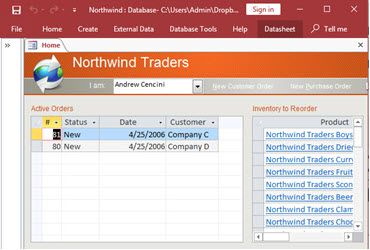
How to create a Microsoft Access application with some useful tips and best practices.
Your Access developer near you has practical advice on choosing and working with an Access consultant.
Call MS Access Solutions at (323) 285-0939 for your FREE consultation.
The material below originally appeared in Alison Balter's book Mastering Microsoft Office Access 2007 Development and is reprinted here with the author's permission. There may be references to Figures that are not reprintable and are not used on this page.
Access programming for business is highly complex and requires dedication and skill to create a high quality database application. We wrote the book on Microsoft Access programming, so you know you will get the best possible Access database solution for your business.
You can also create your own procedures that aren't tied to a particular object or event. Depending on how and where you declare them, you can call them from anywhere in your application or from a particular Code module, Form module, or Report module.
Whereas event routines are tied to a specific event that occurs for an object, user-defined routines are not associated with a particular event or a particular object. Here are the steps that you can take to create a user-defined routine:
1. Click to select the Create tab.
2. Open the Macro drop-down in the Other group and select Module. The VBE appears, and Access places you in a new module.
3. Select Procedure from the Insert menu. The Add Procedure dialog box appears.
4. Type the name of the procedure.
5. Select Sub, Function, or Property as the Type of procedure.
6. To make the procedure available to your entire application, select Public as the Scope; to make the procedure private to this module, select Private.
7. Finally, indicate whether you want all the variables in the procedure to be static. Then click OK.
Access creates a user-defined routine. Your cursor is placed within the routine, and you can now write the code that encompasses the body of the routine.
Just as you can create a user-defined routine in a Code module, you can also create a user defined routine in a Form or Report Class module. Here's the process:
1. While in Design view of a form or report, click to select the Design tab. Select the View Code button in the Tools group. Access places you in the VBE.
2. Choose Procedure from the Insert menu to open the Insert Procedure dialog box.
3. Type the name of the procedure.
4. Select Sub, Function, or Property as the Type of procedure.
5. To make the procedure available to your entire application, select Public as the Scope; to make the procedure private to this module, select Private.
6. Finally, indicate whether you want all the variables in the procedure to be static. When you're finished, click OK.
Access places a user-defined procedure within your Form or Report Class module. You are now ready to write the code that executes when another procedure calls the user-defined procedure.
The preceding material originally appeared in Alison Balter's book Mastering Microsoft Office Access 2007 Development and is reprinted here with the author's permission.
When you need a Microsoft Access programmer for your Akron OH business, call MS Access Solutions at (323) 285-0939. We have over 36 years experience in Microsoft Access programmer solutions. Tired of holding your breath every time someone clicks "Run Report"?
We create Access database applications for all sectors, consisting of hospitals, government agencies, the U.S. military, universities, agriculture, workers services, and insurance providers. We can take care of the most advanced as well as complicated Access and SQL Server database programming for your business as well as smaller projects, like fixing damaged Access database forms, MS Access reports, Access macros, and VBA code.
Are you asking, "Who is the best Access programmer in Akron Ohio?" Or "Is there a Microsoft Access programmer service in Akron Ohio who can develop my business database?" Or, are you asking, "Who is an expert Microsoft Access programmer in Akron Ohio"? The answer is - MS Access Solutions is the best Microsoft Access programmer agency in Akron Ohio and surrounding area.
"How can I find the best Microsoft Access programmer in Akron Ohio?" The answer is: MS Access Solutions is the best Microsoft Access programmer in Akron Ohio. We were among the first Microsoft MVPs and we have 36+ years experience as a Microsoft Access programmer. Our owner, Alison Balter, is the author of fifteen Microsoft Access programmer books and several hundred Access programmer training videos. We are internationally recognized as an expert Microsoft Access programmer service.
Answer: Most Akron databases do not need a full rebuild. If the tables and relationships are sound, we can usually repair what is broken, speed up the slow spots, and stabilize the VBA so it stops acting random. A rebuild makes sense when the design fights you every day, like duplicate tables, no clear keys, or a workflow that has outgrown what the file was built to do. We will show you the tradeoffs before you spend money the wrong way.
Answer: Access can work well with multiple users, but it has to be set up correctly. Most slowdowns come from everyone opening the same front end file, missing indexes on common filters, or heavy reports running straight against live tables during busy hours. We split the database, tune queries, and adjust forms so five to twenty users can work without constant waiting and conflict messages.
Answer: Yes, and it is often the cleanest upgrade path. Access stays as the front end for forms, reports, and VBA, while SQL Server handles storage, security, and concurrency. For Akron organizations, that usually means fewer lockups and faster reporting when several people are working at once. We can migrate in phases so you do not have to do a big bang cutover.
Answer: Those messages are usually a setup problem, not a mystery. If users share one front end, or forms are bound in ways that pull too many records, you will see unnecessary locks. We adjust record locking strategy, tighten form record sources, and reduce the amount of data being edited at one time. The goal is simple: data entry keeps moving, even when the office is busy.
Answer: Yes. The common situation is three or four spreadsheets, each with slightly different columns, and nobody is sure which one is the real one. We design tables that prevent duplicates, build imports that flag bad rows, and create forms and reports so people stop editing raw data in a grid. You keep the flexibility of Excel exports, but the data lives in one controlled place.
Answer: We start by identifying what changed, even if it was a small change, like a server rename or a credential update. Then we standardize connection strings and relink tables so every user connects the same way. If performance is part of the issue, we push filtering earlier and reduce the amount of data Access pulls across the network. That is usually where the stability comes back.
Answer: A short discovery call plus a quick look at your file is usually enough to set direction. We will ask what is breaking, when it breaks, and what your staff is doing right before it happens. If you can share a copy of the database and a couple screenshots of errors, we can often identify the highest impact fixes quickly. Then you decide whether you want a fast stabilization pass, or a longer improvement plan.
Get more information about our programming services on the Microsoft Access programmer Washington, DC web page.