

MS Access As A Dev Tool
Access continues to be a highly efficient tool for business database development.

 Call (323) 285-0939
If your Access database is throwing errors, locking up, or showing the wrong totals, the root cause is often structural. We fix broken tables and relationships, repair queries that duplicate or drop rows, rebuild reports that no longer match the data, and replace failing macros with reliable VBA when needed.
When growth pushes Access past its comfort zone, we can upsize the back end to SQL Server and keep Access as the front end so staff can keep using the screens they already know. We also design and program new custom Access databases when spreadsheets and templates are no longer enough. Call (323) 285-0939 for a free consultation.
When a database starts misbehaving, most owners ask a simple question: "Who can fix this quickly without making it worse?" We help businesses in Los Angeles and across the U.S. get their Access applications stable again, especially when a table gets corrupted, a query suddenly returns duplicates after a join change, or a report total flips when you filter a date range.
It is a rough day when Access crashes mid-entry or a button stops working after an Office update and you get that classic "Can't find project or library" message. We can jump in remotely, and we can come onsite in some cities when the situation calls for it. If you need a form rebuilt, a report corrected, or an Excel-to-database conversion that actually validates data, we focus on fixes that keep your current workflow intact.
MS Access Solutions is not just a repair shop. We build custom systems that cut manual steps, block bad entries at the form level, and keep reporting consistent. A common win is eliminating the "export it, clean it, re-import it" routine by fixing the query logic and locking down field types so the next import does not shift dates into text.
People usually call when the database slows down, throws cryptic errors, or starts locking users out. We fix broken tables, queries, macros, reports, and VBA, then modernize the parts that keep causing repeat issues. If Jet/ACE is the bottleneck, we can move the data to SQL Server and keep Access as the front end, so your staff can keep using the screens they already know, just with fewer timeouts and fewer corrupted records. And if you are still living in spreadsheets, we can design a new custom database that fits how you actually work.
Call us today at (323) 285-0939 to connect with an experienced Microsoft Access developer who can fix your database problems fast.
Los Angeles businesses trust our people for custom Microsoft Access database solutions that actually work. Our lead developer, Alison Balter, brings over three decades of hands-on Access programming experience to every project. She's written 15 books on Microsoft Access development and speaks regularly at tech conferences across the country. We've worked with all kinds of LA businesses over the years. Movie studios in Hollywood need databases that track casting and production schedules. Manufacturers in Vernon require inventory systems that handle complex supply chains. Medical offices across the city want patient management systems that actually make their jobs easier. Real estate companies deal with California's crazy paperwork requirements and need databases that keep everything organized. Does your Access database slow down to a crawl when multiple people try to use it? Or maybe it just stops working entirely during your busiest hours? We fix these kinds of problems all the time. Our approach begins with observing how your staff interacts with the database in real work situations. Then we build custom forms, reports, and automated workflows that match your real business processes - not some generic template that sort of fits your needs.

Many businesses start with simple Access databases but outgrow them as they expand. Our hybrid database applications combine the best of both worlds; an easy-to-use Microsoft Access front end connected to powerful SQL Server backend storage. This approach gives you Access's familiar forms and reports while leveraging SQL Server's advanced security, multi-user capabilities, and enterprise-scale performance. Your staff continues using the Access interface they know, while your data enjoy enterprise-level protection and speed. These hybrid solutions handle thousands of records without slowing down, perfect for growing businesses that need data reliability. You get exactly the data you need for daily activities and smart business decisions. Our developers has experience with everything from small retail operations to large manufacturing facilities. We understand how businesses operate and what database features actually matter for your success.

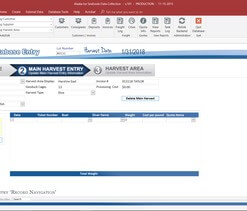


When you need a truly expert Microsoft Access programming company to design and develop your mission critical custom database - Contact Us.





Access continues to be a highly efficient tool for business database development.

How to create a Microsoft Access application with some unique tips and tricks.

Your Access developer near me has some great info for you about using Access efficiently.
Answer: Microsoft Access is a relational database management system (RDBMS) that helps businesses manage large amounts of data. Unlike Excel, which is primarily a spreadsheet tool, Access organizes data into tables, allowing you to perform complex queries, create forms, and generate reports. Access is designed for handling large datasets with multiple relationships between tables, which Excel struggles with. While Excel is perfect for data analysis and calculation, Access provides a more scalable solution for managing, storing, and sharing data, especially for businesses that need more advanced features like multi-user support or automation.
Answer: To create a new database in Microsoft Access, simply open the program and select "File," then "New." Choose a blank database or pick from a variety of templates suited to your needs. After choosing, give your database a name and decide on the location to save it. Click "Create," and a new file (.accdb) will be generated. This new database file is ready for you to start adding tables, queries, forms, and reports. You can also import data from other sources like Excel to populate your new database quickly.
Answer: In Microsoft Access, tables are where data is stored, structured in rows and columns. Queries allow you to search for and manipulate data based on specific criteria, while forms provide a user-friendly interface for entering and viewing data. Reports are designed to format data for printing, making it easier to analyze and share results. Together, these elements form the backbone of a Microsoft Access database, helping users store, retrieve, and display information efficiently. Understanding how these components work together is key to using Access for complex data management.
Answer: Importing data into Microsoft Access is simple and allows businesses to centralize data from multiple sources. To import data from Excel, go to "External Data" in the Access ribbon, select "Excel," and choose the file you want to import. You’ll be guided through options to map the Excel data into an Access table. This process also works for other data sources, such as CSV files, SQL databases, or online data sources. Importing helps streamline data management by consolidating information into one easy-to-use database, ready for querying and reporting.
When you need an expert Microsoft Access programming company to design and develop your mission critical custom database: Call 323-285-0939.