

MS Access As A Dev Tool
Access continues to be a highly efficient tool for business database development.

The Best Microsoft Access Database Solutions owner, consultant, and principal programmer is Alison Balter - a recognized expert Microsoft Access consultant. Alison is the author of 15 Microsoft Access training books and videos. She is a frequent guest speaker at MS Access conferences and has developed hundreds of applications for businesses of all types.
We know your business data is important; we listen to your concerns, ask questions, and gather information from all stake holders. We discuss your needs and requirements for your database. We find out what you want, why you need various features so we can obtain as much information as possible. Once we have the information we need, we work with you to design the proper database architecture, plus the dashboards, the questions (queries), forms, and reports you need for an excellent database system.

We also create websites designed for speed to display your data accurately, using ASP.NET technology. Fast, secure, and robust, our ASP.NET web sites and web applications give you true business tool for finding and displaying information dynamically on the web.

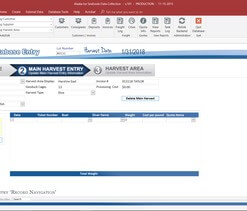


Access continues to be a highly efficient tool for business database development.

How to create a Microsoft Access application with some unique tips and tricks.

Your Access developer near me has some great info for you about using Access efficiently.
Microsoft Tech Talks is a Technical Community event designed to bring IT leaders in the local area together for deep technical discussions and an opportunity to network and share with both local Microsoft Services Professionals, and other IT professionals in the area.
This event is hosted at the Microsoft Office in Tempe, where we will focus solely on Microsoft technologies. We have a huge pool of subject matter experts who have deep experience to cover nearly every product that Microsoft offers including Windows, Exchange, SQL Office 365, Microsoft Access, Azure and much more.
Our Microsoft Services presenters are world-class Subject Matter Experts and trusted advisors to our highly-valued customers.
Our meetings are a great opportunity to "ask the experts" the questions that you have always wanted to ask about their given field of expertise. Subjects will vary from session to session and will attempt to be at the leading edge showcasing our latest features and products available.
From March 2, 2018 Tech Talk
What is the "Cloud"? It's benefits include efficiencies, scale and the ability to offer "Capacity on Demand"; as well as Highly Durable Services. In this presentation we will provide an overview of Cloud Computing, Microsoft's Windows Azure and then take a more focused look at how you can leverage Windows Azure Infrastructure as a Service (IaaS) to deploy Active Directory Federation Services (ADFS); traditionally deployed on-premises and used by many organizations today for their Software as a Service (SaaS) applications and Office 365 Deployments with Single Sign-On (SSO) requirements.
From an article in the Microsoft Tempe Tech Talks. If Microsoft technology interests you, go to the Temp Talks web page for information about their meetings. This is an excellent way to meet people in the Microsoft community, including Microsoft Access programmers, Microsoft SQL programmers, ASP.NET programmers, and Azure specialists.
Microsoft Access is also a cloud based software packaged in Microsoft Access 365. Cloud computing offers an enormous benefit to the people working with the Microsoft Access and Information services. Microsoft in the cloud removes concerns about deploying hardware and software applications. Programming teams, like those at MS Access Solutions, can focus their energies on the design, programming and testing software solutions by utilizing these new powerful cloud based platforms that did not exist a few years ago.
Originally, large cloud based platforms were excessively expensive, plus they were very difficult for users to operate. Microsoft Access 2010 and SharePoint 2010 ushered in a new era of enterprise level cloud based computing for the Microsoft Access community. This was the first time Microsoft Access applications, could be deployed over the Internet, although the format was somewhat limited. Developers can also program.NET applications plus SQL Server databases in the Microsoft cloud using Microsoft Windows Azure and SQL Azure.
Have you ever experienced difficulties locating the exact property you want to use on the Property Sheet from the almost endless choices of properties that are available? Now you can Sort in the Property Sheet for both forms and reports. And it's about time!! We've been working with the Property Sheet functionality for years and sometimes it seems the options are overwhelming. The new Property Sheet Sorting is a welcome improvement. Microsoft Access forms and reports utilize dozens of properties that are implemented by using several tabs often making it hard to find the one you want. Now, with the new Property Sheet Sorting, if a programmer knows the specific name of the property needed, sorting the Property Sheet list makes finding the specific property much easier.
To use the new Property Sheet sorting, open the Property Sheet when the program is in Microsoft Access design mode for forms or reports and you will see the "Sort" toggle button located in the upper right corner. The default setting for the Access software is "Unsorted" and this lists the properties in the original order that developers are used to seeing in the Microsoft Access program.
The new Label Name property for controls is used to associate a label control with another label. If you wanted to do this task in the past you would need to "cut" a label control and then "paste" it on another control to create an association between the two labels. In Microsoft Access 2019 the new Label Name property provides a way for developers to quickly keyboard in the name of a label control to associate it.
This is very important in the development process because associating a label name with a control promotes accessibility since now assistive technologies can detect the labels then indicate their association.
One of the powerful features in Microsoft Azure is its ability to serve as a host for SQL Server databases in a cloud environment. Azure utilizes multiple servers and all this occurs without requiring your intervention; this is considered to be transparent for users. The Azure cloud storage costs start at $5.00 per month for storing a database equal to or less than 1 gigabyte in size. This pricing makes Azure cloud storage an incredible bargain.
To start connecting using a Microsoft Access database, you can connect to the database and then use the tables as you would when linking to SQL Server databases in a network environment or to SQL Express databases if using a desktop situation. For a very small price, when compared to the expense of purchasing and installinng a dedicated SQL Server computer on a network, you can simply have Microsoft do all that technical and expensive work for you. You and your company no longer need concern yourselves about the complexities of hardware purchase, licensing, set-up time, providing space for equipment and other minute issues. A big plus for the Azure storage is that is it readily available on the Internet to people who have prooper log in credentials for that account.
Follow these steps to set up for Microsoft Access - SQL Server in Azure:
Installing an SQL Server can be a bit befuddling, but it is a relatively simple process. For programming and development, you do not need to load and install a complete SQL Server program. You just need to install the SQL Server Management Studio (SSMS) for managing the hosted database. Or, if you prefer, you could install the free version of SQL Server Express.
Microsoft Access database users who are linkin to the new SQL Azure database will not require an SQL installation at all. To connect the SQL Azure to MS Access, users need the proper ODBC driver installed on installed on their machine.
To ensure users can utilize the SQL Azure database, you will need to make certain that users' IP addresses, from their desktop or notebook machines are listed in the SQL Azure firewall., SQL Azure (like standard SQL Server) lets you specify the IP addresses that can directly interact with the database, for security reasons. SQL Azure requires this procedure within its Firewall rules
Directions: Use the Azure portal for your database, then choose the "Set server firewall" option. Following that, add all the necessary IP addresses.